
The news that Revolution has gone into administration didn’t land as another distant business headline for me – it landed right in the gut. Revolution was my first proper job. Not a Saturday shift in a uniform, not a summer stopgap, but my first experience of full-time work and the start of my career in marketing. It came with responsibility, expectations, and the feeling that what I did actually mattered.
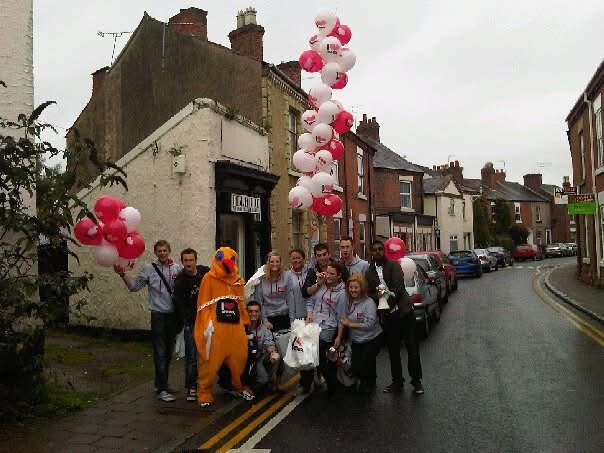
I was a nineteen-year-old university dropout who, frankly, knew very little about very little. But I had some experience organising charity events and was what you’d call very sociable – I knew how to make connections. An opportunity came up at Revolution in Chester, close to home, to become Revs’ sales and events manager, or as my email signature proudly signed off: “Party Planner.”
Nineteen, planning parties and getting paid for it… I’d landed on my feet.
Dream job titles aside, the role itself was unbelievably rewarding and taught me a huge amount. It taught me how to sell, how to listen, how to stay calm under pressure, and gave me my first real taste of marketing.
Most importantly, as I walked the floor meeting customers – people who’d booked hen and stag parties, or big birthday celebrations – I learned how to build relationships and deliver a service that left a lasting memory. To have played even a small role in someone having a great time was a real boost for me.

It was also the first place I saw what good leadership looked like: a general manager and assistant manager who set standards, backed their people, and made you feel trusted before you’d even earned it. That stays with you.
So when I read that Revel Collective, the owners of Revolution, had entered administration – with venues closing, hundreds of jobs lost, and thousands of people affected – it felt deeply personal.
Yes, some sites have transferred to new owners. Yes, some jobs have been saved. But that doesn’t soften the blow for the people whose stepping stone has suddenly disappeared. And, to put it bluntly, it doesn’t take away from the fact that the institution that was “Revs” has gone.
More than a bar
Revolution wasn’t just a bar. For many, it was a rite of passage. You wouldn’t believe the number of people I’ve come across in my career who also worked at Revs – at uni or in their hometown.
It was where you learned how to handle pressure, how to host properly, how to look after guests, and how to create nights people would talk about for weeks. It meant late finishes after big bookings, adrenaline-fuelled service, and that peculiar mix of exhaustion and pride when you’d pulled something off together.
Some might call it almost cult-like, and perhaps at times there was a culture of being overly committed to the business. But honestly? You’d only really understand what I mean if you worked there.
Annual balls. Incentive trips. Recognition for graft. A sense that if you worked hard and cared, someone noticed. You felt part of something special – imperfect, intense at times, occasionally chaotic, but meaningful in a way that’s rare in early jobs.
Were there downsides? Of course. Hospitality is demanding, unsociable, and not always kind. But I remember the good far more than the bad. And judging by the messages lighting up group chats this week, I’m far from alone.
The collapse isn’t just about Revolution
On paper, the reasons are familiar: costs up, margins squeezed. Rising employer National Insurance, higher minimum wages, and increased alcohol duties – all stacking millions of pounds of extra cost onto already tight operations. In a multi-site model with high fixed costs, it doesn’t take much for a venue to go from viable to vulnerable.
Zoom out further and the environment gets harsher still. Hospitality businesses have been closing at pace, consumer confidence remains fragile, and venue numbers are still below pre-Covid levels. Even after restructurings, fundraising, and site closures, the pressure hasn’t let up.
But this isn’t just about tax or timing.
Consumer behaviour has shifted. The classic Revolution night – big groups, rounds of shots, packed floors, long queues at the bar – reflects a version of going out that’s no longer universal. People go out less often, drink less, spend more consciously, and compare every night out with the ease and affordability of staying in.
That doesn’t mean hospitality is broken. It means the old assumptions are.
What we’re really losing: third spaces
For me, the saddest part of all of this isn’t the brand name disappearing from high streets. It’s what that disappearance represents.
For so many, Revolution was a third space – not home, not work, but somewhere people could gather, belong, celebrate, commiserate, and connect. Those spaces are vanishing quietly, one closure at a time. And when they go, they don’t just take jobs with them. They take culture.
Third spaces don’t have to be boozy. They don’t all have to look like bars or clubs. But they do need to exist – especially for younger generations who need places to learn confidence, community, and independence in the real world, not just online.
Working at Revolution taught me how to talk to people, how to sell without selling, how to lead and be led. It gave me skills I still use today. That kind of informal education doesn’t show up on a P&L, but it’s priceless.
What I hope comes next
As someone whose career began there, I feel a mix of grief and frustration.
Grief for the teams affected, for the communities losing familiar venues, and for a brand that shaped so many of our early working lives.
Frustration because, while government policy and rising costs clearly matter, there were also levers within marketing, digital transformation and loyalty that might have built greater resilience earlier.
For every operator reading this, my takeaway is simple: you cannot separate your brand story from your data, your digital from your people, or your marketing from your margin.
Consumer behaviour has moved and the economics have hardened – pretending we are still operating in the old world is a luxury no one has anymore.
And for the people now dusting off their CVs after this week’s news, I hope the skills and resilience they learned there become the same springboard they were for me, just in a sector better prepared for the reality we’re now living in.
Revolution closing isn’t just the end of a brand chapter. It’s a warning sign. And if we don’t listen, we risk losing far more than bars. We risk losing the spaces where people grow up, find their people, and take their first steps into who they’re going to become.
I’ll always be grateful that one of those spaces, for me, was Revolution.