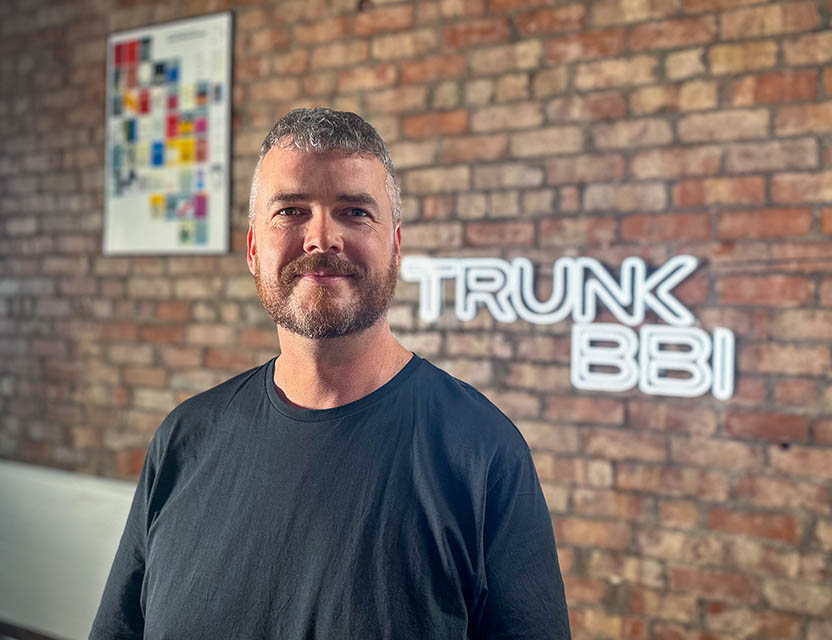

I spent twelve years client-side at Emirates, British Gas, PrettyLittleThing, Card Factory, and in private equity, working with eleven different agencies along the way.
Some were brilliant, most were decent, and a few were genuinely painful to work with. Now I’m agency-side at Trunk, and the shift in perspective has made it crystal clear what separates partnerships that create real value from ones that just churn through deliverables.
Start with what the business actually cares about
Here’s the thing: your board doesn’t speak channel metrics, they speak outcomes. At Emirates, I couldn’t just walk into leadership meetings celebrating revenue on routes that were already flying full—what mattered was load factor and whether we were genuinely growing the business.
Every plan and every report needs to connect the work you’re doing back to something genuinely commercial, whether that’s new customers, CPA, ROAS, or margin contribution. If you can’t imagine a slide sitting comfortably in a board pack, it’s probably not ready to show your agency either.
Demand challenge, not just compliance
If your agency only ever does exactly what you ask them to do, you’ve basically hired a pair of hands rather than a strategic partner. The best relationships I’ve had involved genuine pushback—agencies proposing alternative creative territories, suggesting different ways to allocate budget, or pitching tests that could unlock step-changes in performance that I hadn’t even considered.
You need to actively invite that challenge, then judge what comes back on the strength of evidence and how quickly it gets you to meaningful learning.
Treat operational reliability like a performance metric
When an agency misses a deadline, it’s not just their problem—it makes you look unreliable in front of your own leadership team. Set clear milestones early in any project, make sure briefs go out with proper lead time, and get good at surfacing risks before they turn into full-blown crises.
When timelines inevitably need to shift, you should be getting clear options and honest trade-offs, not a stream of excuses and defensive apologies.
Make your reporting travel upward without you
The brutal truth is that most marketing decks die the moment they leave your team and hit the wider business. Keep the story genuinely simple: what changed against your plan, what you learned that will shift what you do next, and what you’re backing this month plus why it’s going to move the number that matters.
The test of good reporting is whether your stakeholders can repeat your narrative accurately when you’re not in the room to explain it.
Know when to reset, and when to just move on
Trust enables the relationship, the relationship enables good work, and good work rebuilds trust. When any of those links break down, momentum just dies. My instinct is always to try a reset first—get the commercial goal back onto one page, rebuild a clear test plan with proper success metrics, and tighten up the cadence and decision points.
But if the spark and the results don’t come back within a quarter or so, you need to make the change. Tolerating an agency you’ve genuinely outgrown ends up costing way more than the hassle of switching.
Join creative and performance up properly
The best work I’ve ever seen happen when ideas and distribution operate as a single integrated system rather than two separate functions that occasionally talk to each other. You start with a genuine customer insight, create variants that express the same underlying truth across different moments and contexts, then feed performance data back into creative development in a continuous loop.
Push your agency to show you the single creative truth that’s actually winning, the specific audience segments responding to it, and exactly how that learning changes what you build next.
The questions that separate good agencies from average ones
These are the questions I still ask in every strategic review: What should we actively stop doing so we can properly fund what’s working? Which two experiments could meaningfully shift the core KPI in the next 60 days?
What risk are we consistently underestimating and how should we be hedging against it? What creative learning is actually changing what we make next rather than just sitting in a deck? If you personally owned the P&L, what would you do differently this quarter?
Good agencies answer these without hesitation and show you their working, not just their conclusions.
Why I joined Trunk
After twelve years on the client side, I learned that agencies creating genuine value consistently do three things well. They consult with real curiosity to understand how your business actually makes money rather than just nodding along in briefings.
They craft ideas and assets designed to perform in market, not just impress in pitch meetings. And they connect the entire journey—creative, media, technology, and reporting—so it all works as one coherent system rather than a collection of specialist silos.
Consult, Craft, Connect. That’s not just Trunk’s positioning—it’s the operating system I wanted from agency partners for years, and it’s exactly why I’m now here working to embed those client-side expectations into every engagement we take on.
Final thought
The best agencies don’t just deliver the tasks you give them—they actively de-risk your plan, sharpen the story you’re telling internally, and help you win the room when it matters. Hold your partners to that standard consistently. If you’re not getting it after genuine attempts to reset, change either the brief or the relationship itself.